Warm weather, rain, and regular lawn watering can make old stumps change quickly. At Contreras Tree Cut LLC, we help property owners understand stump problems summer in South Carolina and choose practical ways to restore their yards.
Decay may bring mushrooms, insects, soft wood, and uneven ground. Our guide to the stump grinding process explains what happens when grinding becomes the right solution.
Why Summer Weather Changes Old Tree Stumps
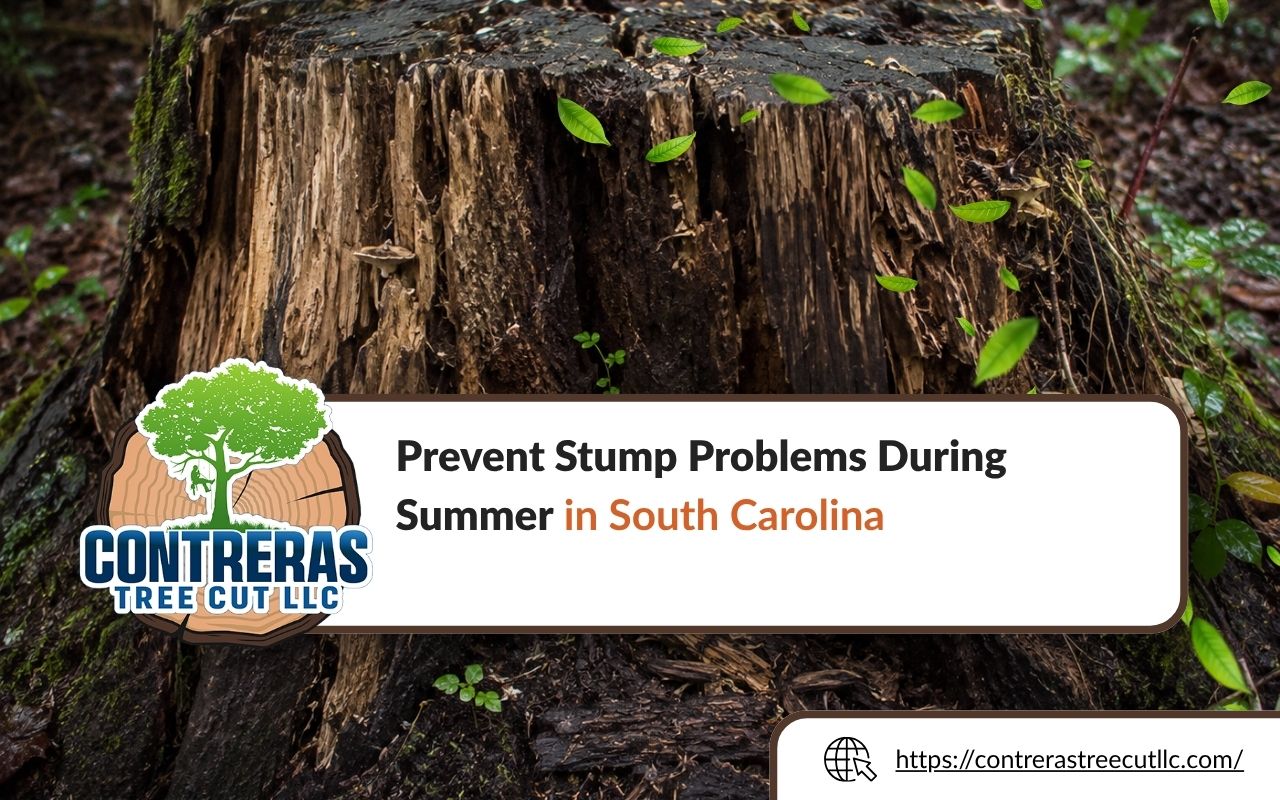
Heat and moisture support the organisms that break down dead wood. Afternoon rain may enter cracks, while shaded soil can stay wet for long periods. These conditions can make the outer wood softer, even when the center and large roots remain firm.
Homeowners often notice stump problems summer in South Carolina when grass and weeds begin hiding the base. Exposed roots, holes, loose bark, and new shoots can make mowing harder. A stump may also interfere with outdoor activities, planting plans, or routine yard maintenance.
What Do Mushrooms on a Tree Stump Mean?
Finding mushrooms growing on tree stump in SC conditions usually means fungi are feeding on damp, decaying wood. The visible mushrooms are only part of the fungal growth. Much of it may already be inside the stump or spreading through old roots below the soil.
Removing the mushrooms does not remove the decay. Check whether the stump feels soft, wet, hollow, or loose near the base. With Contreras Tree Cut LLC, you can review the stump’s condition and decide whether continued monitoring or removal makes more sense for the area.
Signs Summer Humidity Is Speeding Up Decay
Stump rot speed summer humidity in SC varies by tree type, stump size, sunlight, drainage, and soil moisture. A smaller stump from softer wood may change faster than a large hardwood stump. However, surface decay does not always mean the full root system has broken down.
- The wood feels soft or breaks apart with light pressure.
- Deep cracks or hollow spaces appear around the center.
- Mushrooms return after rain or frequent watering.
- Loose bark reveals damp or dark wood underneath.
- The soil sinks or forms holes near old roots.
These signs can make removal easier, but they may also create hidden hazards. Soft wood and weak soil can become a tripping concern. Children, pets, and anyone maintaining the lawn may not notice the unstable area until they step close to it.
Comparing Grinding and Chemical Removal in Heat
Choosing between stump grinding vs chemical removal summer heat depends on timing, location, and how you plan to use the space. Grinding breaks the visible stump into small wood pieces below ground level. Chemical products support gradual softening, but the stump may remain for an extended period.
Our guide on how to remove a tree stump covers common options. At Contreras Tree Cut LLC, we consider access, nearby structures, exposed roots, and the condition of the surrounding ground before discussing grinding.
Grinding is often more practical when a stump blocks mowing, planting, or a planned yard project. Chemical removal may suit a remote area where immediate access is not important. Homeowners should follow all product instructions and consider nearby plants, pets, children, and water sources.
When Spartanburg Stump Grinding Makes Better Sense
Stump grinding Spartanburg SC summer projects can be useful when the ground is firm enough for equipment access. Conditions may change after heavy rain, so homeowners should inspect the route through gates, side yards, or narrow paths before scheduling the work.
- The stump creates a tripping risk near a walkway or play area.
- Exposed roots interfere with mowing or landscape maintenance.
- Repeated shoots continue growing from the remaining root system.
- The stump blocks grass, flowers, fencing, or another planned feature.
- Decay has created hollow sections or unstable soil.
Grinding removes the main surface obstacle, although deeper roots may remain underground. Those roots generally continue breaking down over time. The area may need clean soil afterward because wood chips can settle and change the ground level as they decompose.
Steps to Prepare Your Yard for Grinding
Good preparation supports safer access and a cleaner result. Before the project begins, identify irrigation lines, landscape lighting, fences, garden borders, and other features near the stump. You should also decide how the space will be used after grinding.
- Measure the visible stump and note large surface roots.
- Clear toys, furniture, branches, and loose yard items.
- Check gates and pathways for equipment access.
- Mark irrigation parts or known underground features.
- Plan for soil, grass, or another suitable surface afterward.
Some homeowners research DIY stump grinding techniques before choosing a method. Our team at Contreras Tree Cut LLC can assess difficult access, nearby structures, and other site conditions that may affect the grinding plan.
Frequently Asked Questions
Will summer humidity make every stump rot quickly?
No. The decay rate depends on the tree species, stump size, sunlight, drainage, and moisture. Some outer wood may soften during one warm season, while the center and roots remain firm for years. Our stump grinding process guide explains an option for faster site clearing.
Are mushrooms on an old stump dangerous?
Mushrooms show that fungi are using decaying wood. Their appearance does not always mean the entire yard is at risk. However, unknown mushrooms should not be handled or eaten. Keep children and pets away, and check the stump for soft areas, holes, movement, or repeated fungal growth.
Is chemical removal faster during hot weather?
Summer warmth and moisture may support decay, but chemical removal is still gradual. Results depend on the product, stump condition, and tree type. Review common stump removal methods before deciding whether a slower option fits your plans.
Can I grind a stump without professional equipment?
Stump grinding requires suitable equipment and careful control around roots, buildings, and underground features. Before attempting the work, read about DIY stump grinding preparation. Consider the stump’s size, equipment access, protective gear, and your ability to manage the work safely.
When should I address a summer stump problem?
Consider prompt action when the stump moves, smells strongly, attracts frequent insects, grows repeated shoots, or creates unstable ground. Stump problems summer in South Carolina deserve closer attention when they affect a walkway, play space, driveway, garden, or regular mowing route.
Plan a Cleaner Summer Yard in South Carolina
Monitoring an old stump during warm weather can help you notice decay, fungi, insects, and sinking soil before the area becomes harder to maintain. Add clean soil when the ground settles, remove loose wood debris, and avoid planting a large tree directly over unstable roots.
When you choose Contreras Tree Cut LLC, we evaluate the stump and surrounding space before discussing the next step. To address stump problems summer in South Carolina, contact our team about your stump and yard conditions.