
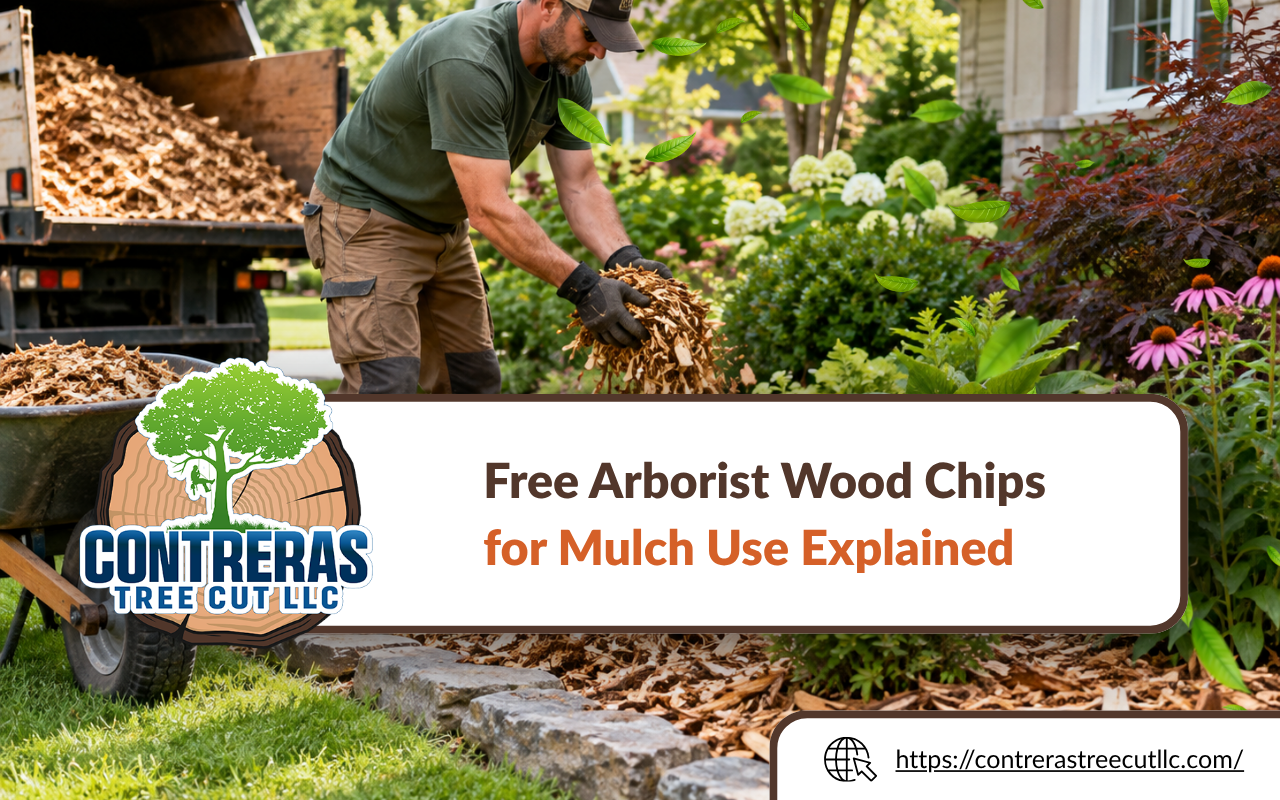
Free arborist wood chips for mulch can be useful in garden beds, around established trees, and along informal paths when the material is clean and applied correctly. request your trimming estimate when tree work may also generate reusable wood material.
Understand What Fresh Arborist Wood Chips Actually Contain
Fresh arborist chips usually include a mix of wood, bark, twigs, and sometimes leaves. That mixed texture is different from uniform bagged bark mulch and can create a more natural mulch layer as it breaks down.
The material should be clean and free of trash, treated wood, or other contaminants before garden use.
Use Arborist Wood Chips Where They Fit Best
- Around established trees without touching trunks.
- In shrub and perennial beds.
- Along informal garden paths.
- Across bare soil where weed suppression is useful.
- Away from areas that need immediate soil incorporation.
Our Anderson tree trimming service can help property owners plan trimming and cleanup around healthy tree structure.
Apply Arborist Wood Chips With A Practical Depth
schedule your trimming estimate when tree maintenance may produce material you want to reuse on the property. Free estimates are available, giving homeowners a clearer way to plan trimming and cleanup together.
A layer around two to four inches is often practical for many landscape beds, but the ideal depth depends on soil, slope, plant type, and how quickly the chips settle.
Keep Wood Chip Mulch Away From Tree Trunks
Piling chips directly against the trunk can hold moisture around bark and bury the root flare. Keep the mulch pulled back so the base of the tree remains visible and air can move around the trunk.
Residential and commercial services allow cleanup plans to fit small yards, larger properties, and managed landscapes.
Compare Fresh Arborist Wood Chips With Aged Mulch
| Feature | Fresh Arborist Chips | Aged Mulch |
|---|---|---|
| Texture | Mixed wood, bark, twigs | More uniform |
| Appearance | Natural and irregular | More finished |
| Best use | Tree rings, beds, paths | Decorative beds |
Fresh material is not automatically inferior. The best choice depends on whether appearance, decomposition, or low-cost coverage is the priority.
Use Fresh Wood Chips Carefully Around New Plantings
Do not mix a heavy quantity of fresh chips directly into the planting hole. Keep mulch on the surface and leave breathing room around young stems and trunks.
Our 24/7 services remain available for urgent tree conditions, while routine trimming and cleanup can be scheduled as planned work.
Know Why Stump Grinding Material Behaves Differently Outdoors
Stump grinding debris often contains more soil and root material than chips produced from branches. It can still be useful in some settings, but it behaves differently and may not create the same clean mulch layer.
Our Anderson stump grinding service explains more about removal of remaining stump material.
Use Wood Chips According To Garden Bed Needs
Choose Thicker Coverage For Weed Suppression
A deeper mulch layer can help block light from reaching weed seeds and reduce surface drying, but piling chips too deeply around stems can create moisture problems. Spread the material evenly and leave the plant base exposed.
Use Aged Material Where Appearance Matters More
Aged mulch often looks more uniform and may suit highly visible front beds better than fresh arborist chips. Fresh chips can still work well in less formal areas, around established trees, and along paths where a natural texture is acceptable.
Refresh Only After The Existing Layer Settles
Wood chips break down gradually and settle with rain and foot traffic. Before adding more, check the existing depth so the bed does not become overly thick. Raking and redistributing older material may be enough in some areas.
- Keep mulch away from trunks and crowns.
- Use cleaner chips in visible planting beds.
- Avoid mixing fresh chips deeply into soil.
- Recheck depth before adding another layer.
At Contreras Tree Cut LLC, we can help homeowners think through cleanup and material reuse when routine tree work generates usable chips.
Let Wood Chips Settle Before Adding More Material
Fresh chips lose volume as smaller pieces settle and begin decomposing. Check the bed after several weeks before topping it up. Maintaining a consistent surface layer is usually more useful than repeatedly adding material until the mulch becomes excessively deep around roots, shrubs, or perennial crowns.
For paths, refresh chips only where traffic has thinned the layer enough to expose soil or create muddy walking areas.
Frequently Asked Questions
Are wood chips good mulch?
Yes, when clean material is spread on the soil surface at an appropriate depth and kept away from trunks and stems.
Are fresh wood chips better than aged mulch?
Neither is always better. Fresh chips are practical and natural, while aged mulch may offer a more uniform appearance.
How thick should wood chip mulch be?
Two to four inches is a practical range for many beds, but site conditions and plant type can change the ideal depth.
Can wood chips be used around trees?
Yes, but keep them away from the trunk and avoid burying the root flare.
Are stump grindings the same as arborist chips?
No. Stump grindings often contain more soil and root material and may decompose differently.
Use Free Arborist Wood Chips for Mulch Wisely
arborist wood chips as mulch can provide useful soil coverage when they are clean, spread correctly, and kept away from trunks and stems. Our team at Contreras Tree Cut LLC can help property owners connect trimming and cleanup with practical reuse options. book your trimming estimate when you want to plan tree work and cleanup together.