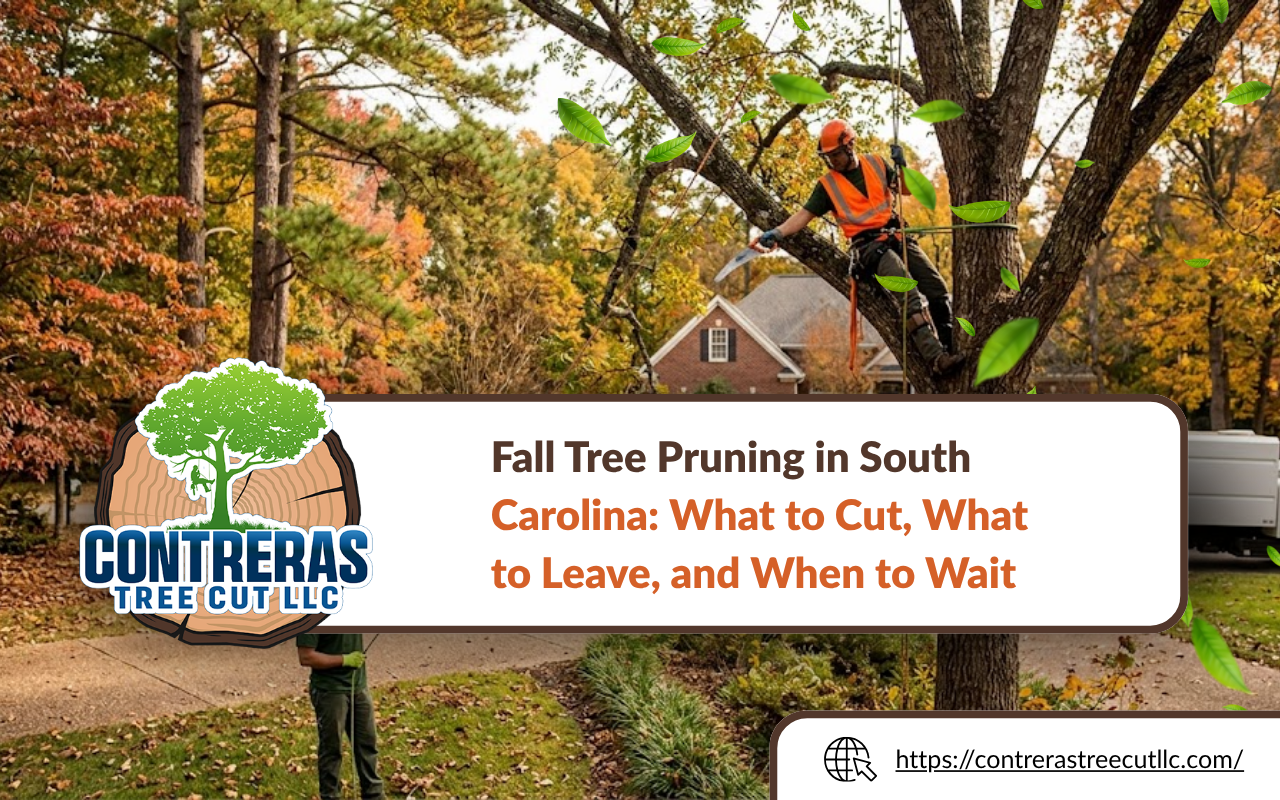
Fall can be a smart time to look closely at the trees around your home or business, but it is not always the right season for heavy pruning. In South Carolina, warm early-fall weather can continue well into the season, while cooler nights arrive later. That timing matters because aggressive cuts can trigger tender new growth before winter. If you are planning seasonal care, our guide to safe tree pruning techniques explains why correct cuts and timing matter as much as the amount removed.
At Contreras Tree Cut LLC, we use more than 15 years of experience to help residential and commercial customers decide what should be pruned now, what can wait until winter, and what needs immediate attention for safety. We are licensed, available 24/7, and provide free estimates across South Carolina.
Is Fall a Good Time to Prune Trees in South Carolina?
It depends on the tree, its condition, and the goal of the work. Clemson Extension advises South Carolina property owners to avoid major pruning in fall because pruning can encourage new growth that may not harden before cold weather. However, dead, damaged, diseased, or hazardous branches can still require attention.
That means a fall tree pruning plan should focus first on safety and tree condition rather than aggressive shaping.
Branches That Often Need Fall Attention
- Dead limbs hanging over roofs, parking areas, or walkways
- Broken branches left after summer thunderstorms
- Diseased limbs that could affect nearby growth
- Branches rubbing against structures or utility areas
- Weak limbs with visible cracks or split unions
- Low branches blocking safe access or visibility
Pruning Guide: Start With an Inspection
September in South Carolina can still feel like summer. Instead of treating the month as a deadline for major pruning, use it as a time to inspect the canopy before leaves begin to drop.
Expert Tip: If a branch is large enough to damage a roof, vehicle, fence, or person if it falls, do not make it a DIY project. Large cuts can shift weight suddenly and require controlled rigging.
Fall vs. Spring Pruning: A Simple Comparison
| Situation | Fall Approach | Better Timing |
|---|---|---|
| Dead or broken limb | Remove when it creates a hazard | As soon as practical |
| Major canopy reduction | Usually avoid | Late winter for many species |
| Disease-related pruning | May be appropriate | Depends on tree and disease |
| Light clearance pruning | Possible when needed | Based on tree condition |
| Heavy shaping | Often better to wait | Late winter or species-specific season |
For a deeper seasonal comparison, see our winter pruning schedule guide. You can also review the difference between tree trimming and pruning before deciding what type of work your property needs.
South Carolina Weather Can Change the Plan
South Carolina trees face thunderstorms, tropical systems, heavy rain, humidity, and occasional freezes. After storms, pruning may shift from appearance to safety.
After a storm, pruning may become less about appearance and more about reducing risk. Fresh cracks, hanging limbs, sudden lean, or broken tops deserve prompt attention.
Common Fall Warning Signs
- A new crack where two large limbs meet
- Branches resting on a roof or another tree
- Dead limbs above driveways or entrances
- Fungal growth near the trunk or root flare
- A canopy that looks uneven after storm damage
- Large branches with missing bark or exposed wood
Do You Need a Permit for Tree Pruning?
Permit rules vary by city, county, neighborhood, property type, and tree status. Some South Carolina municipalities protect street trees, heritage trees, or trees connected to development activity. In Greenville, for example, the city tree-protection ordinance includes specific rules for heritage trees and certain tree disturbances.
Before major pruning or removal, confirm local rules, HOA requirements, property lines, and utility restrictions. This is especially important for trees near public rights-of-way or neighboring property.
Why Professional Pruning Protects More Than Appearance
Correct pruning improves clearance and removes weak growth, while poor cuts can leave large wounds or stress the tree.
At Contreras Tree Cut LLC, we evaluate each tree before recommending work for residential or commercial properties.
Schedule Your Fall Tree Pruning Service
If you are unsure what should be pruned this fall, start with a professional assessment. We provide free estimates and 24/7 availability throughout South Carolina, so you can plan routine work or request help after storm damage.
Contact Contreras Tree Cut LLC for a free tree pruning estimate and get a practical plan based on the condition of your trees and property.
Frequently Asked Questions About Fall Tree Pruning
Can I prune trees in September in South Carolina?
Light safety pruning may be appropriate, but September can still be warm. Avoid major cuts that may trigger tender growth before colder weather. Tree species and condition should guide the timing.
Which branches should be removed before winter?
Focus on dead, broken, diseased, cracked, or hazardous branches that could fall during wind, rain, or ice. Healthy structural pruning can often wait until a better season.
Is fall better than spring for tree pruning?
Neither season is best for every tree. Many trees respond well to late-winter pruning, while flowering trees may need different timing. Safety-related pruning can be done when necessary.
Can heavy pruning damage a tree in fall?
Yes. Removing too much live canopy can stress a tree and may stimulate new growth at the wrong time. A measured approach is safer than aggressive seasonal cutting.
Do you provide free fall pruning estimates?
Yes. At Contreras Tree Cut LLC, we provide free estimates throughout South Carolina and are available 24/7 for both planned tree work and urgent situations.