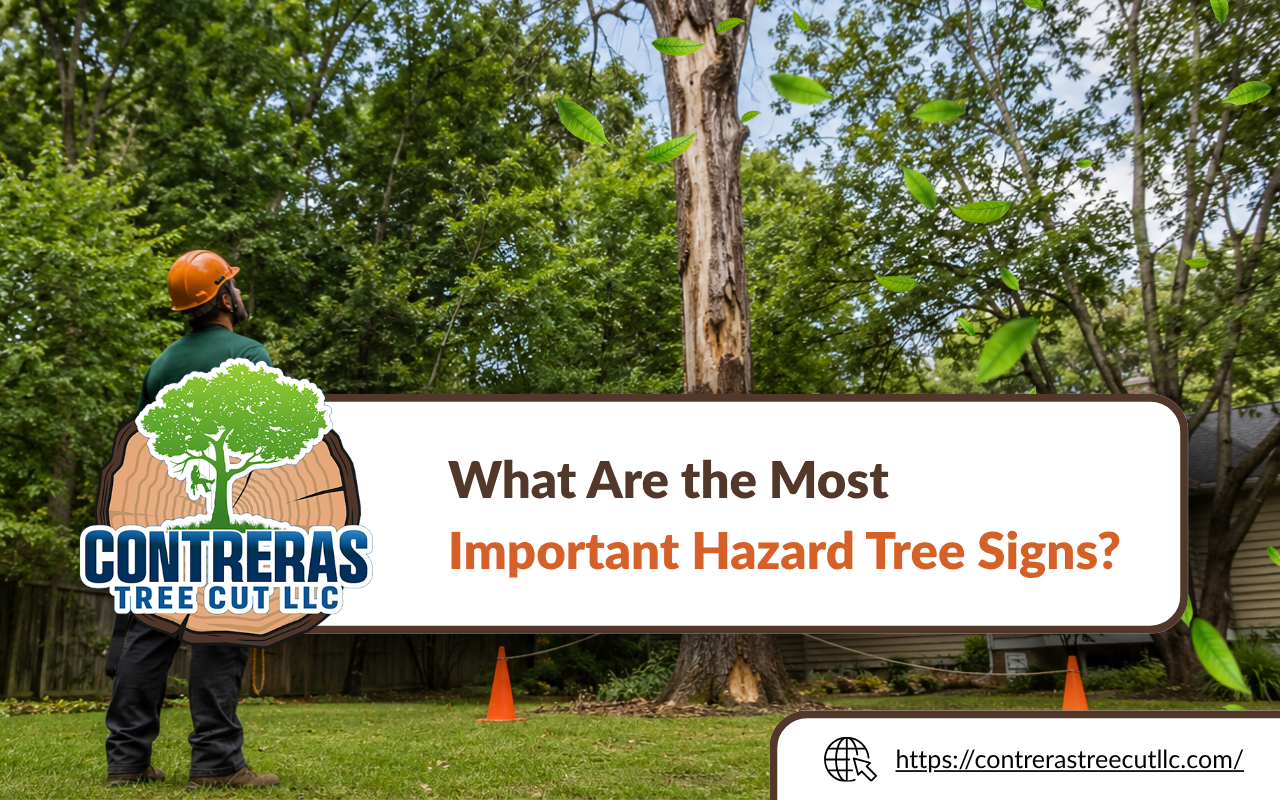
Trees add shade, beauty, and comfort to a property, but damaged trees can also create serious safety concerns. Learning how to spot hazard tree risks before storm season can help protect people, buildings, vehicles, and nearby utility lines.
At Contreras Tree Cut LLC, we encourage property owners to watch for visible changes during summer. You can also review our professional tree care services when a tree needs closer attention or safe corrective work.
Check Warning Signs During August
The warm season makes many tree problems easier to notice. Full leaves can reveal thin canopy areas, uneven growth, early color changes, and pest damage.
Searching for hazard tree signs August can also remind property owners to inspect trees before stronger seasonal weather arrives. Look at each tree from more than one direction, but keep a safe distance from damaged limbs or trees near power lines.
Visible Tree Warning Signs
- Long cracks or splits in the trunk or large branches
- Dead, broken, or hanging limbs above active areas
- Mushrooms, conks, or soft wood near the trunk base
- A new lean with raised, cracked, or shifting soil
- Exposed, cut, or damaged roots around the tree
- Thin leaves, early leaf drop, or dead canopy sections
- Loose bark, deep cavities, or visible hollow areas
One symptom may not confirm that a tree will fail. Several symptoms together, especially near a home, driveway, sidewalk, or play area, deserve prompt attention.
Understand When a Tree Becomes a Storm Risk
A tree becomes more dangerous when a defect could cause a branch, trunk, or root system to fail and strike a nearby target. Location matters as much as tree condition.
A weak tree in an open field may create less risk than one beside a roof, parked car, fence, or busy walkway. Strong wind, heavy rain, and saturated soil can place extra pressure on weak branch unions and damaged roots.
A storm season tree hazard evaluation can identify concerns before severe weather increases the chance of failure. Older trees may recover slowly from injuries, while young trees can develop poor structure after incorrect pruning or planting.
Key Takeaway
Tree risk depends on condition and location. A damaged tree near people, buildings, vehicles, or utility lines needs faster attention than one away from active areas.
Compare Tree Warning Signs With the Right Next Step
Some signs need monitoring, while others call for professional review. A simple comparison can help property owners decide when to keep watching and when to request help.
Hazard Tree Warning Guide
| Warning Sign | Possible Concern | Recommended Next Step |
|---|---|---|
| Dead or hanging limbs | Branches may fall over active areas. | Keep people away and request a safe assessment. |
| Cracked trunk or split branch union | The tree may have structural weakness. | Schedule a professional review before storms. |
| Fungal growth near the base | Decay may be affecting roots or lower trunk wood. | Have the base and surrounding soil checked. |
| New lean with raised soil | Root movement or failure may be developing. | Avoid the area and request prompt evaluation. |
| Thin canopy or early leaf drop | Stress, pests, disease, or root issues may be present. | Monitor changes and ask for guidance if symptoms spread. |
Use a Summer Assessment for Safer Properties
A summer hazard tree assessment works well because trees are actively growing and showing full foliage. Heat and moisture may also make fungal growth, insect activity, and weak canopy development more visible than during colder months.
Our team can examine areas that are difficult to judge from the ground. Before requesting an assessment, note changes you have seen and check visible areas without climbing or touching unstable wood.
Safe Assessment Steps
- View the canopy for dead sections, broken limbs, and uneven weight.
- Check the trunk for cracks, cavities, wounds, and fungal growth.
- Look at major branch connections for splits or narrow unions.
- Inspect visible roots for cuts, decay, lifting, or soil movement.
- Review nearby targets such as roofs, roads, vehicles, and play areas.
Do not shake branches, probe deep cavities, or stand beneath damaged limbs. When the signs are large, elevated, or unclear, use our tree assessment request page to discuss the safest next step.
Key Takeaway
Summer inspections can reveal canopy stress, fungal growth, insect activity, and weak branch structure before storm season increases pressure on the tree.
Recognize Weather Damage and Hidden Weakness
Storms often reveal problems that were already present. Wind can open an existing crack, while wet soil can reduce root support.
Lightning, heavy rain, and repeated movement may also weaken branches that looked stable from the ground. Some damage remains hidden inside the trunk or roots.
A thick trunk can still contain decay, and a leafy canopy does not always mean the tree is structurally sound. Fungal growth, hollow areas, old wounds, and weak branch unions can point to deeper problems.
After severe weather, inspect the property from a safe distance. Keep people and pets away from hanging branches, newly leaning trees, cracked soil, or damaged utility lines.
Know When Professional Evaluation Matters
Professional support is important when a tree is large, close to a building, near power lines, or showing signs of root failure. Elevated branches, trunk cracks, internal decay, and sudden leaning require careful planning and the right equipment.
With Contreras Tree Cut LLC, you receive guidance based on the tree, its surroundings, and the possible consequences of failure. Depending on the condition, the next step may involve pruning, monitoring, support, treatment, or removal.
A trained evaluation can also help separate normal growth patterns from real danger. Review our tree care and risk reduction options to understand how professional work can support a safer property.
Key Takeaway
Professional help becomes important when damage is elevated, near targets, close to power lines, or connected to root failure, trunk cracks, or sudden leaning.
Frequently Asked Questions
What makes a tree unsafe near a home?
A tree may be unsafe when cracks, decay, dead limbs, damaged roots, or a new lean could cause wood to strike the home. You can request an evaluation for a tree near your home when the warning signs are difficult to judge.
Does every leaning tree need removal?
No. Some trees grow at an angle and remain stable for many years. A recent lean is more concerning when it appears with exposed roots, cracked soil, trunk damage, or movement at the base.
Can pruning reduce storm-related tree risks?
Correct pruning can remove dead, broken, or poorly attached branches before they fail. Excessive or improper cutting can create new problems, so explore our professional pruning and tree care services for suitable options.
When should trees be checked after a storm?
Check trees after the weather has passed and the area is safe. Look from a distance for hanging branches, fresh cracks, new leaning, lifted roots, or soil movement. Avoid standing beneath damaged limbs.
What should I do about a serious tree concern?
Keep people, pets, and vehicles away from the area. Do not climb the tree or cut unstable branches yourself. Use our contact page for a serious tree concern and explain the visible changes.
Reduce Future Tree Risk With Preventive Care
Preventive care can support stronger growth and reduce avoidable damage. Regular observation is important because small changes in leaves, bark, roots, or soil may show that a tree needs attention.
When you choose Contreras Tree Cut LLC, we focus on practical steps that fit the tree and its location.
Preventive Tree Care Steps
- Remove dead or damaged branches with proper cutting methods.
- Keep mulch away from direct contact with the trunk.
- Protect roots from vehicles, digging, and heavy equipment.
- Provide suitable watering during long dry periods.
- Avoid topping or removing too much live growth.
- Check high-risk trees before and after storm season.
Thoughtful planting also reduces future conflicts. Choose species that fit the available space, soil, drainage, and distance from buildings or utility lines.
Schedule a Safer Tree Assessment This Season
Early action can turn a growing concern into a manageable plan. At Contreras Tree Cut LLC, our goal is to help you understand visible tree problems and choose a safe, practical response without unsupported assumptions.
Check trees near homes, driveways, sidewalks, fences, and other active areas before severe weather arrives. To discuss cracks, dead limbs, leaning, root damage, or storm concerns, schedule a seasonal tree safety assessment with our team.