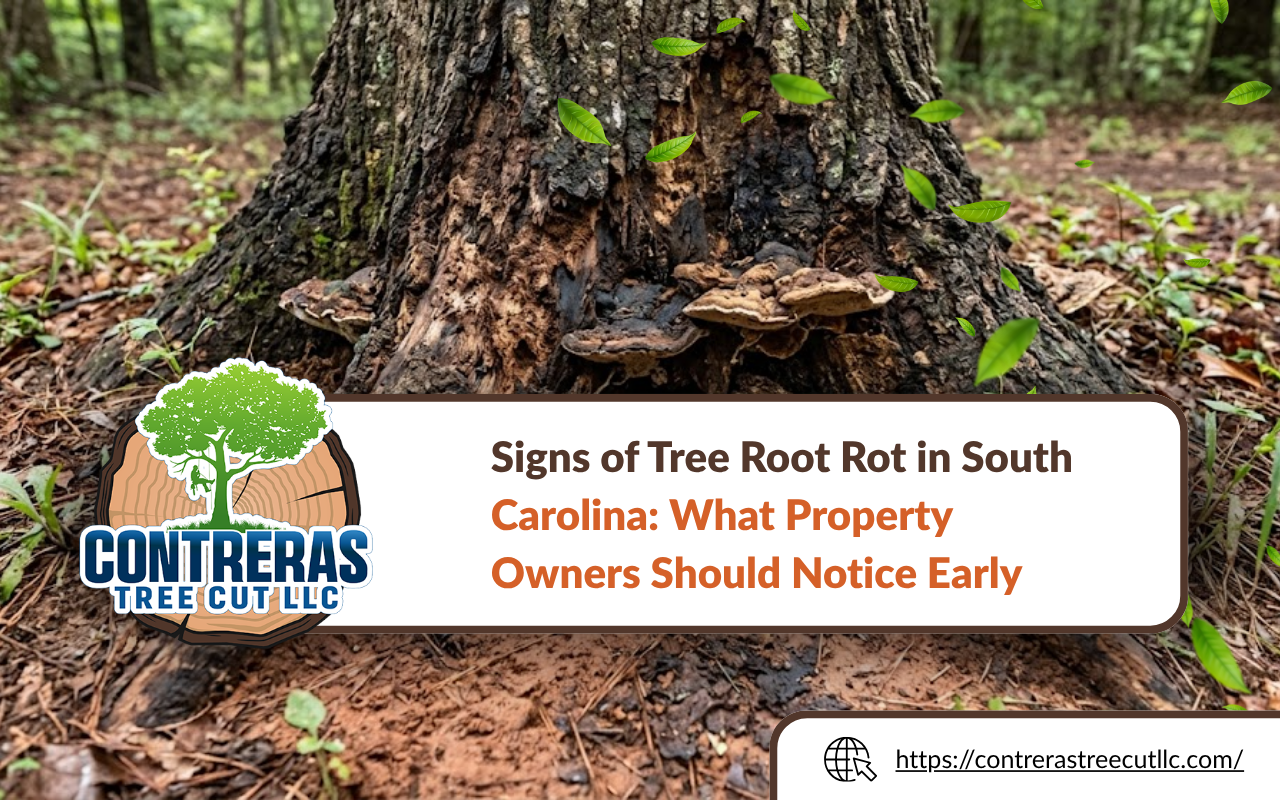
A tree can look green above ground while serious damage develops below the soil. That is what makes root rot difficult to catch early. In South Carolina, heavy rainfall, poor drainage, compacted soil, and warm humid conditions can create stressful root environments. If a tree suddenly loses vigor, leans, or develops fungi near the base, a professional tree risk assessment can help determine whether the issue is limited or becoming a safety concern.
At Contreras Tree Cut LLC, we inspect residential and commercial trees across South Carolina. With more than 15 years of experience, we know that root problems require careful evaluation because the strongest-looking trunk can still depend on a weakened root system.
What Is Tree Root Rot?
Root rot is a general term for diseases that damage roots and the lower trunk. Clemson Extension notes that soil-borne pathogens such as Phytophthora, Pythium, Rhizoctonia, and Fusarium can thrive where roots remain overly wet or oxygen is limited.
Seven Signs a Tree May Be Dying From the Roots Up
1. Thinning Leaves or Dieback
A tree with damaged roots may not move enough water and nutrients to the canopy. You may notice smaller leaves, sparse growth, dead branch tips, or one side declining faster than the other.
2. Mushrooms or Fungal Growth Near the Base
Mushrooms alone do not prove a tree is unsafe, but certain fungal fruiting bodies near the trunk or root flare can be a warning sign. Clemson Extension identifies Armillaria root rot as one disease that can cause decline and collapse.
3. Soft or Dark Roots
Healthy feeder roots are often firm and light-colored. Rotting roots may look brown or black and can feel soft or decayed.
4. A Sudden or Increasing Lean
Some trees naturally lean. A new lean is different. If soil lifts on one side, roots become exposed, or the trunk angle changes after rain or wind, treat the situation seriously.
5. Loose Soil Around the Root Plate
Movement in the ground around the base can indicate that the root plate is shifting. Keep people and vehicles away until the tree can be evaluated.
6. Bark Changes Near the Soil Line
Darkened bark, peeling areas, cavities, or decay around the root flare can point to moisture or disease problems.
7. Repeated Decline Despite Normal Care
If watering, mulching, and basic care do not improve the tree, the problem may be underground rather than in the canopy.
Root Rot Signs and What They May Mean
| Warning Sign | Possible Concern | Recommended Next Step |
|---|---|---|
| Mushrooms at trunk base | Root or wood decay | Professional inspection |
| Sparse canopy | Root stress or disease | Check drainage and roots |
| New tree lean | Possible root instability | Restrict access and inspect promptly |
| Standing water | Low-oxygen root zone | Correct drainage if possible |
| Dead branches plus base decay | Advanced decline | Risk evaluation |
Why South Carolina Properties Are Vulnerable
From the Upstate to the Lowcountry, South Carolina can receive heavy rainfall in short periods. Clay-heavy or compacted soils may drain slowly, while low areas can hold water around roots. Tropical systems can add both saturation and wind, which is a dangerous combination if roots are already weak.
Overwatering and mulch piled against the trunk can also trap excess moisture around roots.
Common Mistake: Do not bury the trunk base under a deep “mulch volcano.” Keep the root flare visible and avoid trapping constant moisture against the bark.
Can Root Rot Be Treated?
Treatment depends on the cause and severity. Better drainage, less irrigation, and corrected mulch may help, but advanced root decay can make removal the safer option.
Our tree maintenance services can address conditions that contribute to decline, while trees that present an immediate hazard may require a controlled removal plan. Learn more about how safe tree removal works when preservation is no longer practical.
Insurance and Liability Considerations
Insurance coverage depends on the policy and cause of loss. Document storm damage, make reasonable temporary repairs, and report claims promptly; gradual decay may be treated differently from sudden storm damage.
When Root Problems Become an Emergency
- The tree suddenly leans toward a home or road
- Large roots lift out of the ground
- The trunk moves noticeably at the soil line
- A storm exposes broken or decayed roots
- The tree partially uproots
At Contreras Tree Cut LLC, we are licensed and available 24/7. We provide free estimates and serve property owners throughout South Carolina.
Request a free root-risk and tree service estimate before a declining tree becomes a larger property problem.
FAQs About Tree Root Rot
What does root rot look like in a tree?
Common signs include thinning foliage, dieback, fungal growth near the base, dark or soft roots, bark decay, poor growth, and sometimes a new lean.
Can a tree recover from root rot?
Some trees can improve if the damage is limited and drainage or irrigation problems are corrected. Advanced decay or major root loss can make recovery unlikely.
Are mushrooms at the base always dangerous?
No, but they should not be ignored. Some fungi grow on harmless organic matter, while others may be connected to root or trunk decay. Identification matters.
Can too much water cause root rot?
Yes. Constantly wet soil reduces oxygen around roots and can favor several soil-borne diseases. Improve drainage and avoid watering when the soil is already saturated.
When should I remove a tree with root rot?
Removal may be necessary when the root system can no longer support the tree safely, especially near buildings, roads, play areas, parking lots, or other high-use spaces.