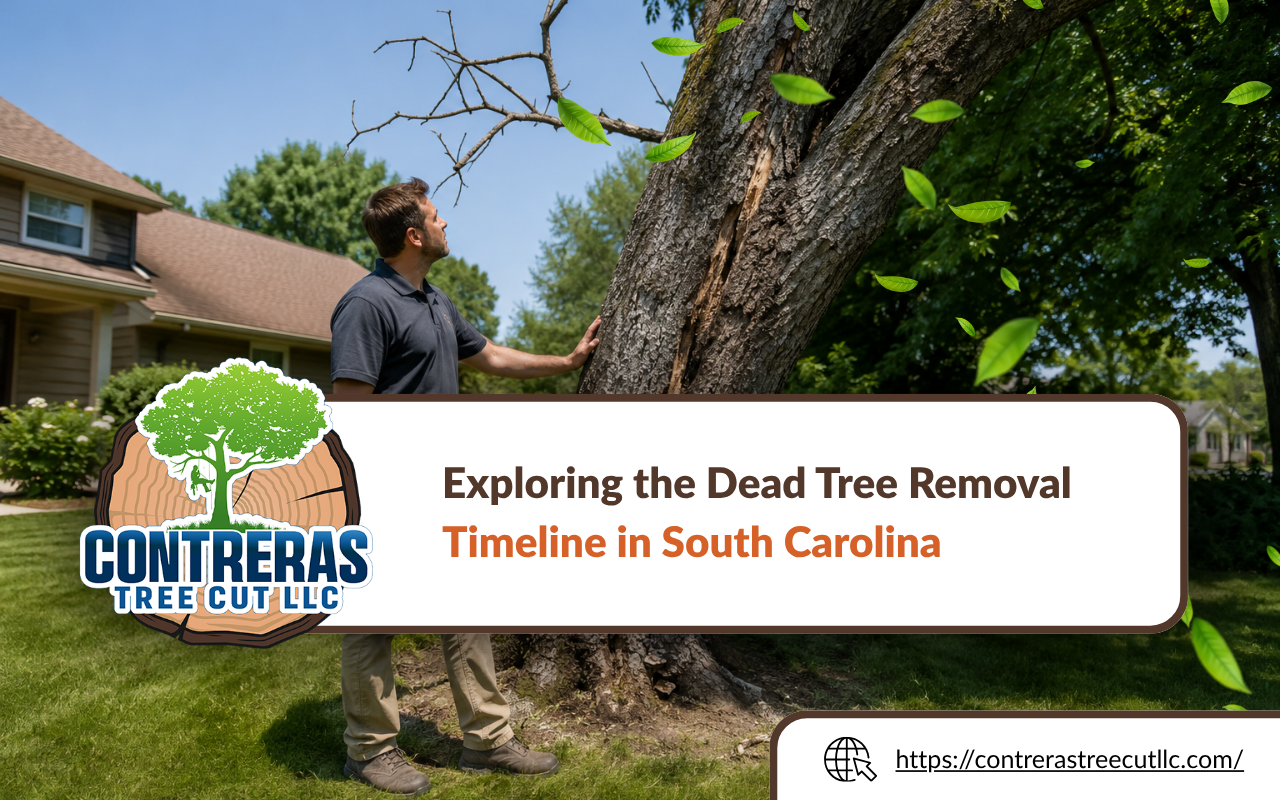
A dead tree may look stable, but its strength can decline without clear warning. Understanding the dead tree removal timeline in South Carolina helps you plan before weak branches, damaged roots, or severe weather create a dangerous situation.
At Contreras Tree Cut LLC, we assess visible hazards and site conditions before recommending the next step. Our guide to identifying a hazardous tree can help you recognize concerns before removal becomes urgent.
How South Carolina Climate Speeds Tree Decay
South Carolina’s warm and humid conditions can support fungal growth and wood decay. Heavy rain may also soften the soil around weakened roots. These conditions can reduce the time a dead tree remains stable, especially when the trunk already has cracks or hollow areas.
Storms add more pressure to weak branches and damaged root systems. A tree that appears unchanged during calm weather may react differently during strong wind. The dead tree removal timeline in South Carolina should reflect the tree’s condition, location, and exposure to seasonal weather.
Our team at Contreras Tree Cut LLC considers the whole property, not only the visible trunk. Nearby buildings, driveways, fences, utility lines, and areas used by people can all increase removal urgency.
Warning Signs That Change the Removal Timeline
Visible decay often shows that a dead tree is losing strength. Regular checks can help you notice changes before branches fall or the trunk begins to lean. Pay close attention after strong winds or long periods of rain.
- Large cracks running through the trunk or major limbs
- Peeling bark or large areas with missing bark
- Mushrooms or shelf-like fungi near the trunk base
- Loose, broken, or hanging branches in the canopy
- A new lean or lifted soil around the roots
- Hollow sounds when the trunk is lightly tapped
One sign does not always reveal the full condition. Several signs together may point to advanced decay and a greater dead tree falling risk. A professional inspection can help determine whether the tree needs prompt removal.
How Long Can a Dead Tree Stand?
There is no single safe period for every dead tree. Some hardwood species may remain upright longer than softer species, but standing does not mean safe. Internal decay can continue while the outside still appears firm.
Size and location are also important. A small dead tree in an open area may present less immediate danger than a large tree beside a home. When people ask how long can dead tree stand, the safest answer depends on condition, surroundings, and weather exposure.
With Contreras Tree Cut LLC, you receive an assessment based on the tree and its environment. We look for weakened unions, trunk damage, root movement, and nearby targets that could be affected by failure.
Factors That Set Removal Priority
The removal timeline becomes shorter when several risk factors appear together. A large tree near an occupied area usually needs faster attention than a smaller tree far from structures.
- Tree condition: Advanced rot, open cavities, and major cracks can increase urgency.
- Location: Trees near homes, roads, play areas, and parking spaces carry greater consequences.
- Root stability: Soil movement, exposed roots, or recent flooding may weaken support.
- Weather exposure: Open areas may expose dead trees to stronger wind forces.
- Access: Tight spaces and nearby structures may require extra planning and equipment.
These factors help explain when is dead tree dangerous for a specific property. Our article about the benefits of removing dead trees in Greer also covers the value of acting before damage occurs.
Planning Safe Dead Tree Removal
Good preparation can make the removal process more organized. Before the scheduled date, clear vehicles, outdoor furniture, toys, and movable decorations from the work area. Tell the tree crew about irrigation lines, gates, septic areas, or other site concerns.
- Keep children, visitors, and pets away from the work zone
- Confirm that the crew can access the tree and removal area
- Discuss how branches, logs, and other debris will be handled
- Check whether stump removal is part of the planned work
- Allow flexibility when unsafe weather affects the schedule
When you choose Contreras Tree Cut LLC, we discuss the site before work begins. Homeowners who need local service information can also review our tree removal options in Anderson.
Permits, Access, and Professional Scheduling
Tree removal rules can vary by city, county, neighborhood, or property type. Some locations may have requirements related to protected trees, property boundaries, or utility areas. Check with the appropriate local office or property association before scheduling work.
Access can also affect timing. Narrow gates, sloped ground, nearby buildings, and overhead lines may require a more detailed removal plan. These conditions do not always prevent removal, but they can influence equipment choices and scheduling.
Dead tree removal should not be treated like routine yard work. Unstable wood may break without warning, and climbing a weakened tree can be dangerous. A trained crew can plan controlled cuts and maintain a restricted work area.
Frequently Asked Questions
When is a dead tree dangerous?
A dead tree may be dangerous when it has large cracks, falling limbs, root movement, fungal growth, or a growing lean. Review our hazard tree warning signs for more details.
What increases dead tree falling risk?
Strong wind, saturated soil, root damage, trunk cavities, and heavy limbs can increase the chance of failure. Risk is also greater when the tree stands near a home, road, fence, or gathering area.
Can I delay removal until after storm season?
Delaying removal may increase risk when the tree already shows decay or instability. The benefits of timely dead tree removal include reducing exposure before severe weather arrives.
Does every dead tree need immediate removal?
Not every tree has the same urgency. Location, size, structural condition, and nearby targets matter. An assessment can help establish a practical dead tree removal timeline in South Carolina for your property.
How should I prepare for a tree removal visit?
Clear the surrounding area and share access concerns with the crew. For location-specific service details, visit our page about professional tree removal in Anderson.
Plan Your Tree Removal Before Risk Grows
A dead tree can become less stable as decay, rain, and wind affect its structure. Acting early gives you more time to review access, local requirements, and the safest removal approach without waiting for branches to fall.
At Contreras Tree Cut LLC, we help property owners understand the dead tree removal timeline in South Carolina based on visible conditions and site risks. Contact our team about your dead tree to discuss a practical next step for your property.